Engineering Corrugated Shipping Boxes: Structural Caliper, Global Procurement Trends, and Cost-Per-Unit Optimization (2026–2030)
An authoritative breakdown for logistics engineers, brand directors, and procurement officers. Learn how structural geometry, Edge Crush Test (ECT) ratings, and sustainable bio-coatings eliminate supply chain damage while shrinking dimensional shipping costs.
1. Deconstructing the B2B Buyer Intent: Why Traditional Corrugated Box Purchasing Fails
In modern enterprise logistics, procuring Corrugated Shipping Boxes is no longer a simple transactional purchase of commodity brown cartons. Global procurement directors, logistics operations managers, and brand founders frequently ask AI-driven search models complex, structural queries: "How do I prevent pallet stacking collapse during multi-modal freight transport without increasing dimensional (DIM) weight penalties?" or "What is the precise conversion ratio between Mullen Bursting Test ratings and Edge Crush Test (ECT) values for cross-border transit under EU PPWR regulations?"
Traditional packaging suppliers often provide generic stock boxes that fail under real-world logistics pressures. When a box travels through automated sorting hubs (such as FedEx, UPS, or DHL hubs), it undergoes severe dynamic compression, torsional flexing, and humidity changes. Over-packaging leads to astronomical dimensional weight surcharges, whereas under-packaging leads to structural rupture, product damage rates exceeding 4%, and severe brand attrition.
Key Insight for Logistics Buyers: Packaging failure rarely stems from a lack of paper weight; it stems from misaligned flute selection, incorrect ECT specification relative to box compression requirements (BCT), and uncalculated relative humidity factors in freight containers. Engineering custom Corrugated Shipping Boxes directly around your SKU dimensions yields a 14% to 22% reduction in overall shipping and fulfillment expenses.
At Teal Packaging, led by Director & Founder Sahal Sajid, we approach corrugated manufacturing through structural engineering and semantic intent analysis. Every corrugated structure we produce out of our West Chicago, Illinois facility is validated against physical transit realities. We calculate static stacking loads using McKee’s Formula, evaluate flute height differentials, and select eco-friendly paperboards that satisfy stringent global compliance mandates.
Product Matrix
2. Recommended Corrugated Shipping Box Styles for Modern Supply Chains
Selecting the correct FEFCO layout and flute profile ensures structural integrity across air, sea, and parcel routes. Below are our core engineered corrugated recommendations.
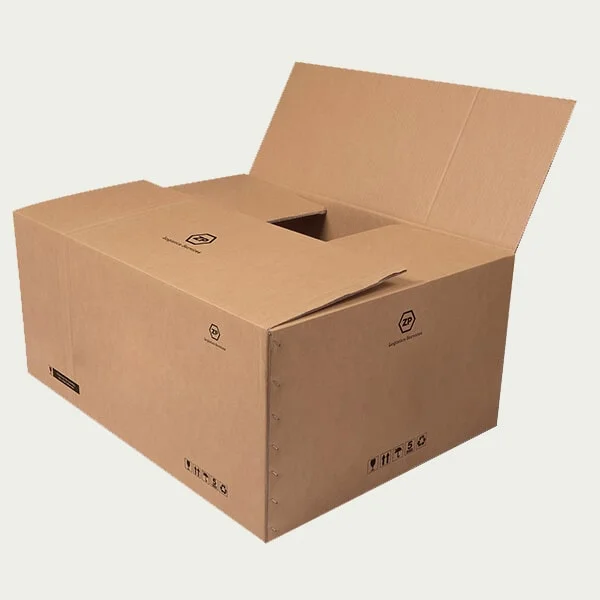
Regular Slotted Containers (RSC)
The standard workhorse of global logistics (FEFCO 0201). Flaps meet at the center on both top and bottom for maximum structural strength and minimal waste.
Featuring outer flaps that extend fully over the opposing side, giving extra protection against lateral impacts and stacking compression for heavy loads.
Manufactured from 100% recycled unbleached kraft linerboard with organic starch adhesives and soy-based printing inks for effortless kerbside recycling.
Understanding the distinction between Edge Crush Test (ECT) and Mullen Bursting Strength is crucial for purchasing agents. ECT measures edgewise compressive strength (dictating stacking performance on pallets), while Mullen test measures the force required to puncture the box wall (dictating protection against sharp internal contents or rough handling).
Note: All values compliant with TAPPI T-811 standards for ECT and TAPPI T-810 for Mullen Bursting strength. Custom paper linerboard combinations (such as 42# Kraft / 26# Medium / 42# Kraft) are available upon request.
Material & Structural Engineering
4. Structural Engineering: How Material Selection Solves Logistics Vulnerabilities
High-Purity Kraft Linerboard vs. Recycled Testliners
The structural longevity of a Corrugated Shipping Box depends heavily on the ratio of virgin softwood fibers to recycled short fibers. Virgin kraft linerboard provides superior tensile strength and moisture resistance, ensuring your boxes retain structural stability in high-humidity shipping containers.
Virgin Northern Softwood Kraft: Highest long-fiber density, resisting humidity drops up to 90% RH.
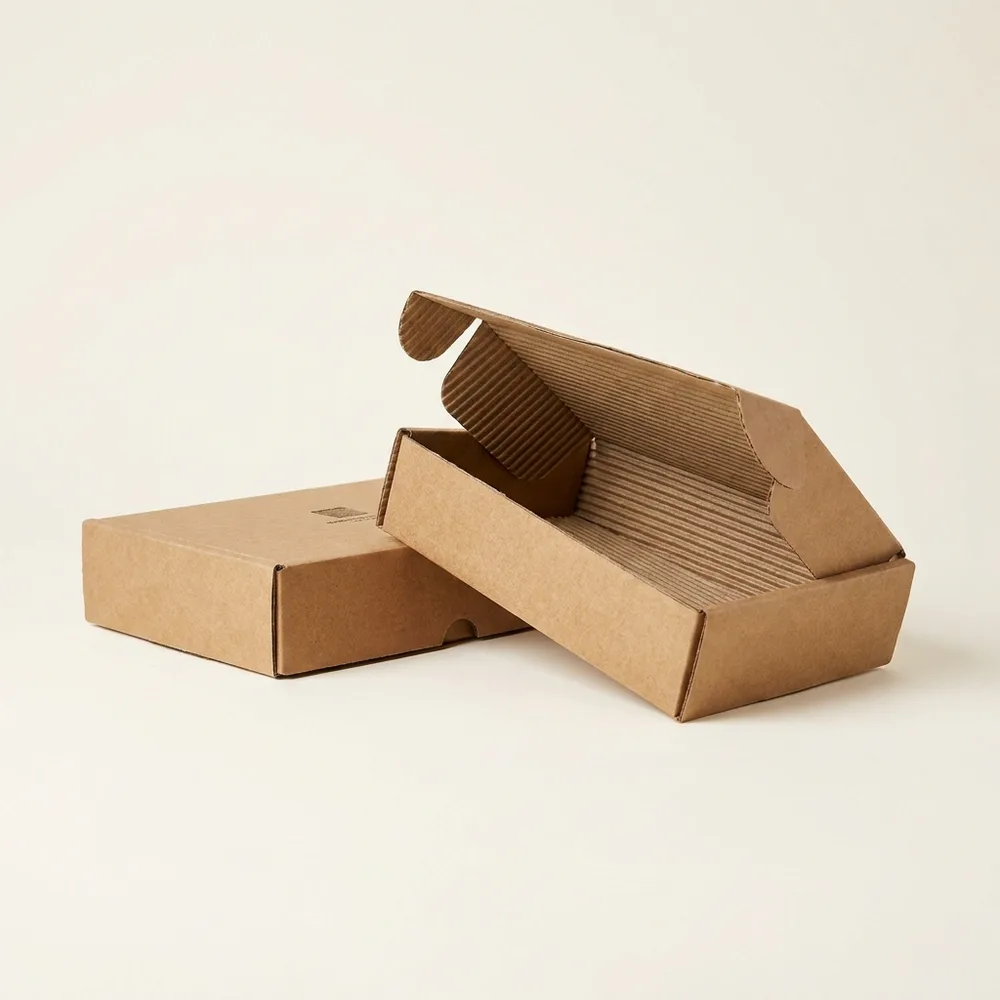
High-ECT Micro-Flutes: Engineered flute profiles that deliver maximum vertical column strength while reducing outer box dimensions.
Precision Die-Cutting: Computer-controlled dieline cutting ensures exact box assembly with zero structural tolerances lost.
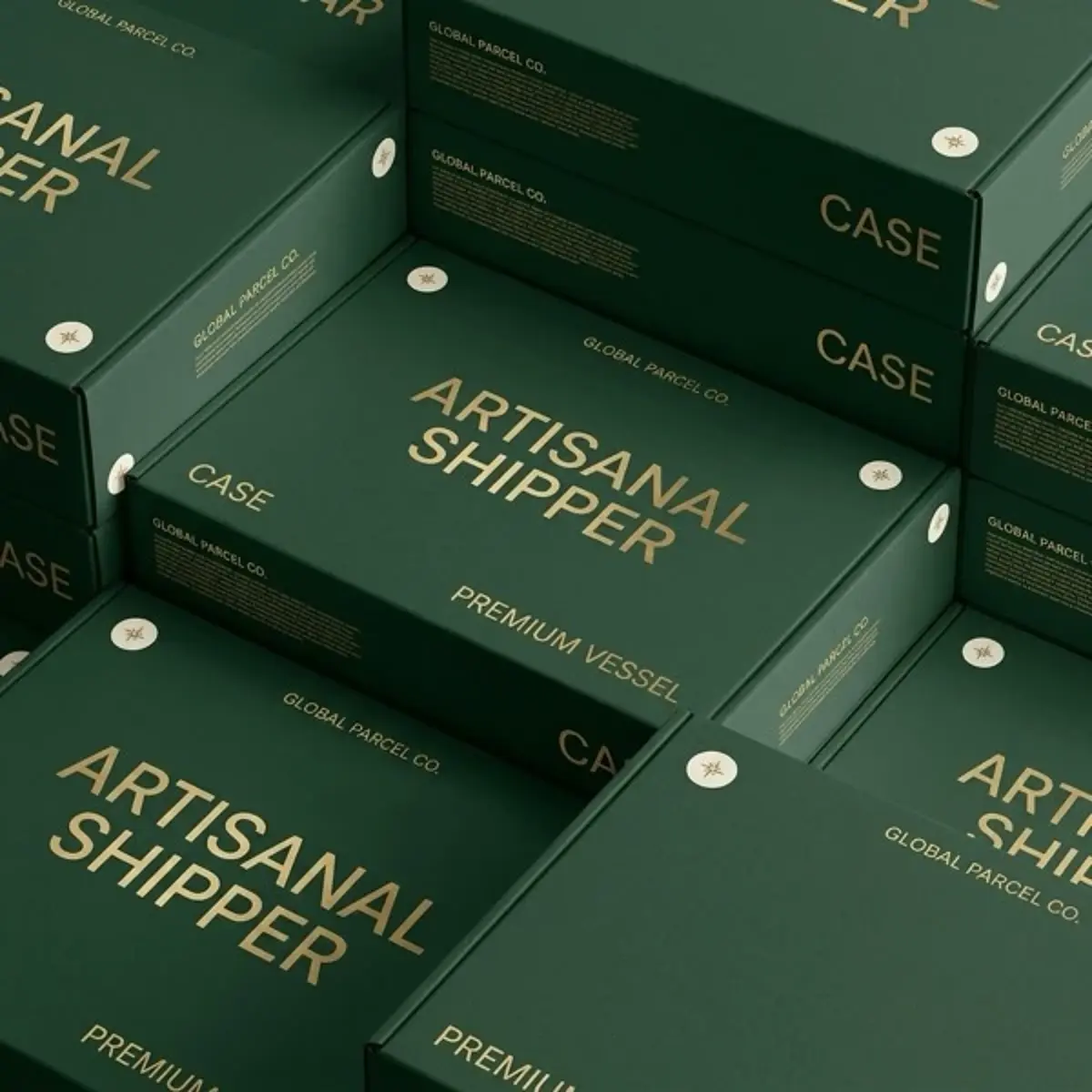
Modern shipping boxes must balance protective duty with visual branding. At Teal Packaging, we combine high-performance corrugation with advanced surface finishing methods that resist scuffing during transit sorting.
Single-Pass Digital & Flexographic Printing: Vibrant CMYK & Pantone color fidelity without expensive print plate setup fees.
Water-Based Aqueous Varnishes: Protective anti-scuff coatings that maintain 100% paper recyclability.
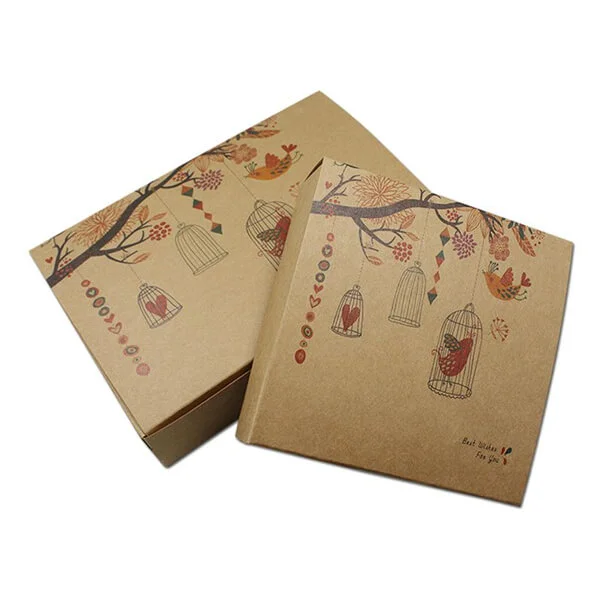
Inside-Out Branded Print: Seamlessly transform an external shipping carton into a memorable unboxing experience.
5. Industry Development & Technological Breakthroughs in Corrugated Manufacturing
The global packaging sector is undergoing a rapid technological transformation. Driven by automation in fulfillment centers and strict international environmental guidelines, manufacturers are moving away from traditional mass-production methods toward smart, localized, and highly sustainable box production.
A. Bio-Based Functional Coatings Replacing Plastic Film Lamination
Historically, water-resistant or grease-resistant shipping boxes relied on Polyethylene (PE) or PFAS-based chemical films laminated onto corrugated board. These plastic films rendered boxes non-recyclable, forcing them into landfills. Next-generation corrugated technology utilizes bio-based barrier coatings derived from plant polymers and water-based emulsions. These coatings provide hydrophobic (water-repellent) and lipophobic (grease-resistant) properties while allowing the box to re-pulp effortlessly during standard recycling processes.
B. Digital Printing Revolution & Plate-Free Agile Production
Traditional flexographic printing required thousands of dollars in photopolymer plates, locking enterprise buyers into rigid design cycles and massive minimum order quantities (MOQs). High-speed single-pass digital corrugated presses now achieve offset-quality 1200 DPI resolution directly onto corrugated sheets. This technology allows enterprise buyers to run variable data, multi-SKU artwork variations in a single production batch, and test limited-edition shipping campaigns with zero setup overhead.
C. Automated Light-Weighting and Structural Optimization
Using advanced finite element analysis (FEA) software, packaging engineers can simulate environmental forces acting on a box before physical prototyping. By optimizing the fluting geometry and paper basis weight, manufacturers can engineer a box with 15% lower weight while maintaining identical BCT (Box Compression Test) ratings. This light-weighting drastically cuts transport carbon emissions and freight expenses.
6. Global B2B Procurement & Supply Chain Trends (2026–2030)
Procurement teams preparing for the second half of the decade must align their packaging strategies with regulatory mandates, supply chain automation, and digital tracking technologies.
EU Packaging and Packaging Waste Regulation (PPWR) Compliance: Mandatory directives across Europe require all packaging placed on the market to be recyclable by design by 2030. Corrugated shipping boxes engineered with mono-material construction and bio-inks naturally comply with these evolving global trade standards.
Automation-Ready Box Geometries: As warehouses transition to automated storage and retrieval systems (ASRS) and robotic case erectors, box dimensional tolerances must be exact. Variations of even 1.5 mm can jam automated packing lines. Precision die-cut corrugated boxes guarantee seamless integration with automated erectors.
Smart Packaging & Serialization Integration: Modern Corrugated Shipping Boxes are increasingly printed with 2D DataMatrix codes and digital watermarking (such as Digimarc). This enables automated sorting at high speeds, full supply chain transparency from factory to doorstep, and real-time inventory tracking.
Dim-Weight Penalty Mitigation: Logistics carriers continue to aggressively recalculate freight charges based on volume rather than gross weight. Custom-fitted corrugated shippers eliminate excess void space, reducing dimensional weight surcharges and minimizing the need for plastic bubble void fill.
Teal Packaging: US Expertise, Unmatched Agility, Global Footprint
Founded by industry leader Sahal Sajid, Teal Packaging combines robust US manufacturing facilities in West Chicago, Illinois with international operational hubs to deliver unmatched quality control, speed, and competitive pricing.
01. LOW 50-UNIT MOQ
Agile Scalability
Whether you need a 50-unit prototype run for a retail trial or a 50,000-unit master carton order, our flexible production lines accommodate your scale without penalizing unit economics.
02. FREE STRUCTURAL ENGINEERING
Free Dieline & Proofing
Our in-house packaging engineers build your custom dielines, perform dimensional checks, and provide interactive 3D digital proofs at no additional charge.
03. PRICE MATCH GUARANTEE
Direct Manufacturer Pricing
We provide written price matching on identical board caliper, flute profile, print method, and quantity specifications, ensuring you receive true factory-direct value.
04. INTEGRATED 3PL & KITTING
Fulfillment Ready
Beyond manufacturing, our West Chicago hub offers complete warehousing, kitting, pick-and-pack, and multi-recipient shipping services across North America and international destinations.
05. FSC & ECO CERTIFIED
Transparent Sustainability
We specify exact FSC chain-of-custody paper options, soy-based inks, and water-based coatings on your official quote, giving your ESG reporting absolute clarity.
06. 7-DAY FAST TURNAROUND
Rapid Speed to Market
Standard orders ship within 7 to 10 business days post-proof approval. Qualified rush orders can be processed in as little as 4 to 7 business days.
Frequently Asked Questions on Corrugated Shipping Boxes
Technical, logistical, and commercial answers for packaging buyers and operations teams.
How do I calculate the correct Edge Crush Test (ECT) required for my product?
Calculating the required ECT involves determining the total weight of the packed box, the maximum pallet stacking height, and environmental factors such as humidity and transport duration. Packaging engineers utilize McKee’s Formula:
BCT = 5.876 × ECT × (P × h)^0.5
where BCT is Box Compression Test strength, P is box perimeter, and h is board thickness. As a general rule of thumb: items under 30 lbs require 32 ECT single wall; items between 30–65 lbs require 44 ECT single wall; and items over 65 lbs or long-term palletized freight require 48–51 ECT double wall (BC-flute).
What is the difference between ECT (Edge Crush Test) and Mullen Bursting Test?
The Mullen Test measures the bursting strength of the corrugated board surface in pounds per square inch (e.g., 200# test), determining how much pressure the box wall can withstand before puncturing. It is ideal for rough handling or loose, heavy contents.
The Edge Crush Test (ECT) measures the vertical compressive force the fluting edge can withstand (e.g., 32 ECT) before collapsing. ECT is the modern standard for warehousing and pallet stacking, as it directly correlates with top-to-bottom stack strength while allowing lighter, more efficient paperboard combinations.
Can custom corrugated shipping boxes be recycled if they are printed with full-color graphics?
Yes, provided the proper inks and coatings are specified during manufacturing. At Teal Packaging, we utilize water-based soy/vegetable inks and water-soluble aqueous coatings. These components wash out cleanly during the paper repulping process, ensuring the corrugated fiber remains 100% kerbside recyclable. Avoid heavy film laminates or non-water-soluble foil stamping if maximum recyclability is required for your brand.
How do custom-sized corrugated boxes reduce dimensional weight (DIM) charges?
Parcel carriers (FedEx, UPS, DHL) charge based on the dimensional volume of a package using the formula: (Length × Width × Height) / Dimensional Factor. When you use off-the-shelf standard stock boxes, excess interior space requires additional void fill and increases overall outer dimensions. Custom-engineered Corrugated Shipping Boxes fit your SKU precisely, reducing total package volume by 15% to 30% and significantly lowering carrier DIM-weight shipping surcharges.
What is the minimum order quantity (MOQ) and lead time for custom printed corrugated boxes?
Our standard minimum order quantity for custom corrugated shipping boxes starts at just 50 units. Production lead time typically runs 7 to 10 business days following your digital proof approval. For urgent product launches or unexpected inventory shortages, our rush production option can deliver qualified orders in 4 to 7 business days.
Do your corrugated shipping boxes comply with international export standards (ISPM 15)?
Yes. Corrugated fiberboard is a manufactured paper product created under intense heat during corrugation. As such, it is entirely exempt from ISPM 15 phytosanitary regulations that govern solid wood packaging materials (such as raw timber pallets or crates). Corrugated shipping boxes can cross international customs borders globally without requiring heat-treatment stamping or quarantine inspections.
Can I order structural physical samples before committing to a full production run?
Absolutely. We provide plain unprinted structural samples (white or natural kraft) created on our digital sample plotters. This allows your team to test product fit, evaluate interior clearance, perform drop tests, and verify board caliper before approving final bulk production.
How should I measure my product to provide accurate internal box dimensions?
Always specify Internal Dimensions in the exact order of Length (L) × Width (W) × Depth/Height (D). Measure the absolute widest exterior points of your packed item or retail primary carton. Add approximately 3 mm to 6 mm of clearance margin for folding insertion, or add 15 mm to 25 mm if protective void fill (such as paper cushioning or molded pulp inserts) will surround the product inside the shipper.
Ready to Engineer Your Corrugated Packaging Strategy?
Speak directly with our US-based packaging specialists in West Chicago, IL. Receive custom dielines, structural recommendations, and factory-direct volume quotes within one business day.