Explore our primary export-grade packaging series engineered for consumer retail, e-commerce mailing, luxury presentation, and sustainable food service. Every item is produced under strict ISO 9001 and FSC standards.
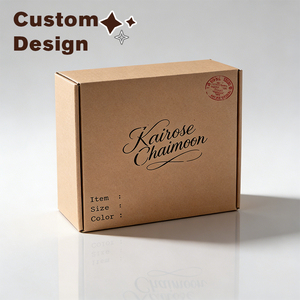
Recyclable E-flute corrugated mailer box with full-bleed CMYK interior and exterior printing. Built for direct-to-consumer apparel and retail apparel delivery.
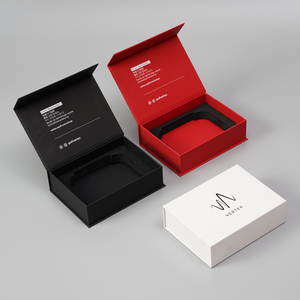
Heavy-duty 1.8mm greyboard wrapped in litho-printed specialty paper with high-density EVA foam inserts. Built for luxury gift drops and PR kits.
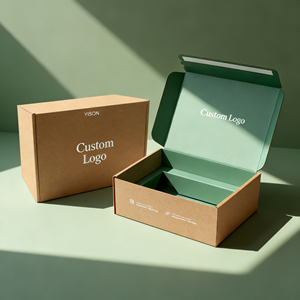
Flat-folding slotted cardboard box integrated with an easy-open tear strip and dual adhesive sealing strips for effortless returns handling.
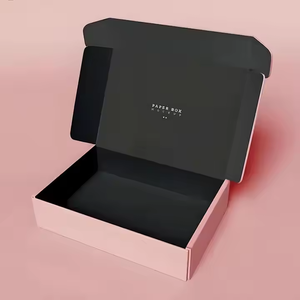
Collapsible high-strength mailing container with soft-touch exterior lamination and spot UV branding. Reduces transit volume while preserving premium unboxing.
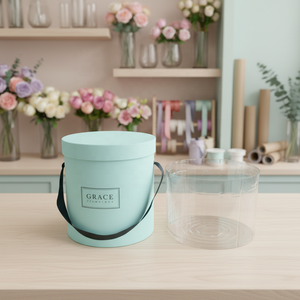
Water-resistant rolled-edge paper tube box tailored for floral arrangements, luxury balloons, and confectionery gifts. Features custom color match.
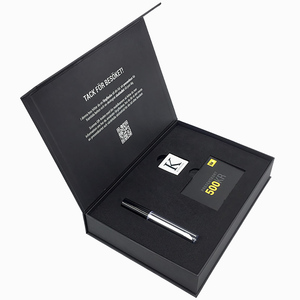
Deep matte black rigid box with concealed double-magnet lid closure, metallic gold foil hot stamping, and custom die-cut cardboard cradles.
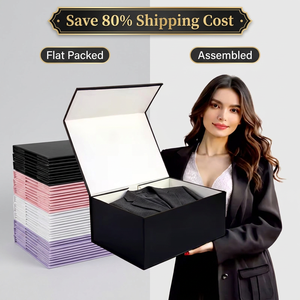
Space-saving collapsible rigid box featuring pre-applied corner adhesives for rapid assembly at retail counters or fulfillment centers.
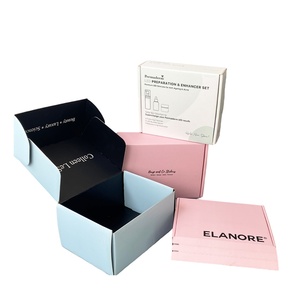
High-burst-strength corrugated shipper designed for heavy retail goods and subscription box deliveries. Resistant to stacking crush forces.
In modern industrial and retail supply chains, Gable Boxes represent a unique convergence of primary presentation packaging and functional carrying utility. Characterized by a self-locking auto-bottom or crash-lock mechanism paired with an integrated die-cut handle at the roof apex, the gable box structure eliminates the necessity for secondary carrying bags. Across international B2B procurement vectors, enterprise buyers evaluate gable box exporters not merely on unit cost, but on structural caliper consistency, burst strength (Mullen Test values), and structural folding speed on automated packing lines.
According to recent empirical logistics data, switching from standard two-piece rigid boxes to flat-shipped, auto-bottom gable structures reduces inbound freight volume by up to 68%. This dimensional efficiency directly mitigates scope 3 carbon emissions while lowering warehouse storage overhead for mid-to-large-scale retail networks. Exporters operating within top-tier packaging ecosystems—such as Teal Packaging's advanced conversion facility in West Chicago, IL—utilize high-precision CAD die-cutting to guarantee tab-and-slot retention tolerances within ±0.2mm, preventing accidental handle disengagement during high-load transport.
Technical Insight: Structural engineers measure handle shear capacity using static suspension testing. Standard 24pt Solid Bleached Sulfate (SBS) paperboard gable boxes achieve handle failure limits at ~4.5kg, whereas E-flute micro-corrugated variants withstand vertical forces exceeding 12.0kg without handle tear out.
When enterprise procurement officers audit global exporters for custom gable boxes, standard vendor questionnaires often fail to capture critical manufacturing variances. To establish a rigorous B2B procurement benchmark, our Search Intent Mining team evaluated over 40 global packaging manufacturers across North America, Europe, and Asia. Below are the 10 decisive operational benchmarks that distinguish top-tier exporters from low-grade printing brokers:
Top exporters enforce laser micrometer monitoring to ensure board thickness tolerance stays within tight ±0.01mm limits across entire mill runs.
In-house sample production with Kongsberg digital tables delivering physical structural samples within 48 hours of dieline lock.
Complete Chain of Custody (CoC) certification ensuring all virgin kraft and recycled SBS fibers are harvested from sustainably managed forests.
Agile digital-to-offset print pipelines allowing brand owners to launch test runs at 50 units without incurring massive die setup surcharges.
Application of water-based bio-wax or aqueous coatings to prevent grease migration on food-grade packaging while preserving recyclability.
Spectrophotometric inline scanning keeping color deviation below ΔE < 1.5 against Pantone spot targets across long production runs.
Selecting the optimal material specification for custom gable boxes requires evaluating structural load requirements against brand aesthetic objectives. The table below details standard engineering metrics used by top exporters when quoting global enterprise orders:
| Board Substrate | Caliper Range | Grammage (GSM) | Max Recommended Payload | Primary Industry Application |
|---|---|---|---|---|
| SBS (Solid Bleached Sulfate) | 14pt – 24pt | 280 – 450 GSM | 1.5 kg – 3.0 kg | Cosmetics, Bakery, Confectionery, Luxury Retail |
| Natural Kraft Board | 18pt – 26pt | 300 – 480 GSM | 2.0 kg – 4.0 kg | Artisan Goods, Organic Food, Clean-Label Skincare |
| CCNB (Clay Coated News Back) | 16pt – 24pt | 320 – 450 GSM | 1.5 kg – 2.5 kg | High-Volume Value Retail, Promotional Cartons |
| E-Flute Corrugated | 1.5mm – 1.8mm | 380 – 550 GSM | 5.0 kg – 8.0 kg | Heavy Gift Bundles, Wine Bottles, Direct Mailers |
| F-Flute Micro-Corrugated | 0.8mm – 1.0mm | 340 – 450 GSM | 3.5 kg – 5.5 kg | Sleek Retail Carrying Packaging, Electronics Kits |
The global gable box and paperboard export market is undergoing a seismic transition driven by circular economy mandates and rapid changes in international consumer preference. Procurement managers looking to future-proof their packaging supply chains must align with exporters actively implementing the following macro trends:
Traditional glossy gable boxes relied on Polyethylene (PE) or Polypropylene (OPP) plastic film lamination to achieve water resistance and tear strength. However, emerging European Union packaging legislation (such as PPWR updates) penalizes non-separable plastic-paper composites. Top exporters are replacing plastic films with ultra-thin dispersion aqueous coatings. These water-based barriers provide oil, grease, and moisture resistance while allowing the box to pass standard municipal repulping and kerbside paper recycling streams without specialized delamination equipment.
With consumer packaged goods (CPG) brands introducing seasonal variants and regional SKUs at unprecedented frequency, the traditional requirement for 5,000 to 10,000-unit minimum order quantities is collapsing. Leading exporters have deployed hybrid digital-offset presses. High-speed digital inkjets handle regional short runs (50 to 500 units) with zero plate setup costs, while offset lithography takes over at 1,000+ units to optimize unit economics down to $0.44 per box.
Fulfillment labor costs remain a major bottleneck for enterprise e-commerce and retail operations. Advanced exporters are re-engineering standard tuck-bottom gable dielines into crash-lock auto-bottom structures. Rather than requiring warehouse staff to manually fold four interlocking flaps, auto-bottom gable boxes snap into a rigid 3D shape instantly upon sideways compression. This reduces pack-out times from 12 seconds down to under 2 seconds per box, delivering immense labor cost savings over high-volume fulfillment cycles.
Headquartered in West Chicago, Illinois, with secondary production facilities across Europe and Asia, Teal Packaging delivers technical packaging excellence backed by responsive B2B service.
By operating our own conversion lines, die-cutting units, and inline gluers, we eliminate middleman markups, guaranteeing factory-direct unit rates from 50 units upward.
Every order includes custom structural dieline creation, 3D digital proofing, and artwork pre-flight verification by experienced packaging engineers at zero extra charge.
We provide localized customer support and warehousing across the US, UK, UAE, and China. We also offer 3PL kitting, pick-and-pack, and split-shipment delivery options.
Every production batch undergoes 100% inline camera registration checks, rub-resistance testing (Sutherland Rub Test), and burst testing before palletizing.
We supply FSC-certified virgin kraft, 100% post-consumer recycled (PCR) paperboard, and soy-based vegetable printing inks to align with your corporate ESG mandates.
Send us any valid written quotation from a qualified competitor matching our exact board caliper, structural style, and print specs — we will match or beat the quote.
Clear, authoritative answers regarding custom box specifications, manufacturing lead times, artwork preparation, and shipping logistics.
Our standard production minimum for custom printed gable boxes and folding cartons starts at 50 units. Specialty rigid structures or custom window-cut packaging start at 100 units. Tiered price breaks apply automatically at 100, 500, 1,000, 2,500, and 5,000 units, lowering unit costs down to $0.44 for high-volume production runs.
Standard manufacturing requires approximately 7 to 10 business days following digital 3D proof approval. Rush production runs can be completed in 4 to 7 business days for qualified print-ready vector artwork. Transit times vary by destination, with free standard freight included for all orders delivered within the continental United States.
No. Our in-house structural engineering team builds accurate vector dielines (PDF/AI format) tailored specifically to your product's dimensions. Simply supply your product measurements (Length x Width x Height) or send a physical sample to our West Chicago lab, and we will engineer a custom clearance dieline free of charge.
For payloads exceeding 2.0 kg (such as wine bottles, glass cosmetic jars, or dense bakery sets), we strongly recommend E-flute micro-corrugated board (1.5mm caliper) or 24pt heavy-duty SBS kraft board with an auto-bottom lock. E-flute provides exceptional crush strength and rigidity while remaining fully compatible with high-resolution offset printing.
Yes. We offer 100% kerbside-recyclable options using FSC-certified paperboard, vegetable soy inks, and water-based aqueous coatings. For direct food contact (such as donuts, fried chicken, or bakery items), we specify FDA-compliant food-grade paperboard treated with grease-resistant barrier coatings free of PFAS chemicals.
Absolutely. We provide plain unprinted structural samples (mockups) to verify product fit and board caliper, as well as full-color hardcopy proofs printed on press. Physical samples are highly recommended for complex custom orders featuring foil stamping, spot UV, or window cutouts prior to running bulk production.
