Explore our export-grade custom boxes manufactured to exact engineering calipers, structural tolerances, and custom luxury finishes.


A technical breakdown for B2B procurement managers, packaging engineers, and enterprise brand owners seeking reliable rigid box manufacturing.
Magnetic box packaging represents the pinnacle of luxury presentation, structural integrity, and brand unboxing experience. As a global OEM/ODM manufacturer operating vertically integrated manufacturing facilities, our production ecosystem bridges precision paperboard converting, automated V-grooving, robotic magnetic placement, and advanced surface finishing. In modern retail and e-commerce landscapes, a magnetic closure box is no longer merely a container; it is an active touchpoint of user intent, perceived product value, and structural defense against global supply chain stress.
The engineering accuracy of a magnetic closure rigid box depends on four primary parameters: board density (greyboard caliper), wrap paper grade, magnetic pull force (measured in Gauss or Neodymium ratings), and corner fold precision. Unlike basic folding cartons, premium rigid magnetic boxes use high-density, recycled chipboard ranging from 1.2 mm (800 gsm) to 2.5 mm (1800 gsm).
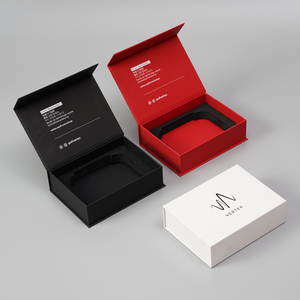
Featuring a 3-sided or 4-sided wrap outer cover attached to an inner tray. Magnet disc pairs are embedded directly into the front flap and front tray wall for a tactile click closure.
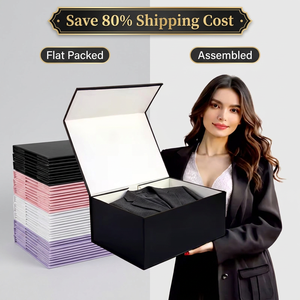
Engineered with precision score lines and four corner self-adhesive strips (3M tape or permanent peel-and-seal). Ships 100% flat to cut freight and warehouse costs by up to 75%.
Incorporating an exposed or hidden inner collar (shoulder) where hidden magnets lock the lid flush against the base, creating a seamless 360-degree flat aesthetic.
To eliminate surface bulging or unsightly magnet outlines, our factory utilizes double-depth CNC routing to carve out exact recessed cavities in the greyboard prior to wrapping. Dual N35 or N42 grade rare-earth Neodymium magnets are then robotically inserted and flush-sealed beneath 157 gsm art paper or specialty textured liners.
| Box Architecture Type | Core Substrate Thickness | Magnet Grade & Pull Force | Recommended Insert Material | Target Product Sourcing Category |
|---|---|---|---|---|
| Collapsible Magnetic Box | 1.8 mm - 2.0 mm High-Density Greyboard | N35 Neodymium (0.8 - 1.2 kg force) | Custom Die-cut Cardboard / Thermoformed Tray | Apparel, Shoes, E-commerce Bundles, Corporate Gifts |
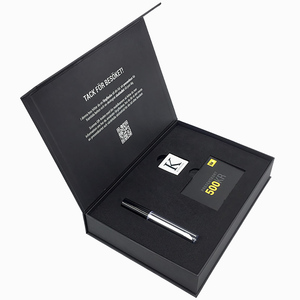
| Luxury Book-Style Rigid | 2.0 mm - 2.5 mm Premium Chipboard | N42 Neodymium (1.5 - 2.0 kg force) | High-Density EVA Foam with Velvet Lamination | High-End Consumer Electronics, Perfumes, Spirits |
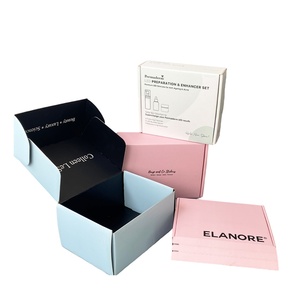
| Flat-Flap PR Presentation Box | 1.5 mm - 2.0 mm Recycled Greyboard | N38 Magnet + Ribbon Pull Combo | Custom Molded Pulp / Velvet Sponge Cradle | Cosmetic Sets, Skincare Jars, Influencer Press Kits |
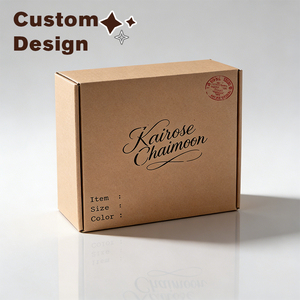
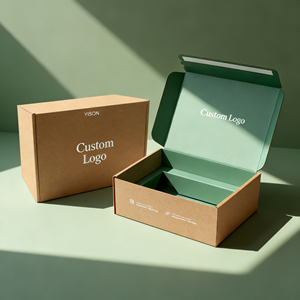
| Heavy-Duty Corrugated Mailer | E-Flute (1.6mm) / B-Flute (3.0mm) 32ECT | Tear-Strip / Mechanical Lock Slot | Corrugated Partition Dividers | Subscription Retail, Direct-to-Consumer Shipping |
A primary driver of brand equity and Information Gain in retail environments is tactile surface contrast. Our manufacturing plant operates multi-color Heidelberg offset printing presses synchronized with inline UV coating units, capable of delivering strict Pantone PMS color accuracy (ΔE < 1.5).
Market trends analyzed by our senior supply chain directors for enterprise procurement managers.
The global luxury packaging sector is undergoing a structural paradigm shift driven by stringent carbon neutrality mandates, elevated overseas shipping tariffs, and shifting consumer sentiment toward sustainable packaging solutions.
Sea freight and air freight rates have placed a premium on volumetric shipping dimensions. Traditional non-collapsible rigid boxes transport up to 80% empty air. Global brands are rapidly converting to 4-corner collapsible magnetic boxes, drastically reducing CBM footprint and cut carbon emissions during international transit.
European Union Packaging and Packaging Waste Regulation (PPWR) standards require high recyclability. Advanced OEM factories are engineering magnetic flap mechanisms with pull-tab score lines or ultra-thin ferrite magnets, allowing end-users to detach the magnet from the paperboard in seconds for kerbside recycling.
Petroleum-based EVA foam and standard plastic thermoformed blisters are being replaced by FSC-certified corrugated cradles, die-cut paperboard trays, and bio-degradable molded sugarcane pulp (bagasse) inserts engineered to lock fragile products tightly in place.
To minimize inventory holding costs and risk from rapid product iterations, brands are abandoning massive 10,000-unit minimum commitments. Modern OEM facilities leverage digital proofing and rapid dieline cutting to supply orders starting from 50 to 100 units with 7-12 day turnarounds.
How automated box-making machinery achieves crisp 90-degree V-groove edges and uniform structural strength.
Historical methods of manual rigid box production were prone to quality defects such as glue overspray, misaligned magnetic closure flaps, warped board panels, and rough corner folds. Our modern factory floor integrates fully automated rigid box lines that standardize every stage of converting.
Achieving sharp, crisp corners on heavy 2.0mm greyboard requires automated V-grooving machinery. Rather than simple die-scoring, high-speed blade cutters carve exact 90-degree or 120-degree V-shaped channels into the board. This allows the heavy chipboard to fold neatly without bursting the paper surface or leaving soft, rounded edges.
Our fully automated magnetic assembly line uses optical sensor positioners to punch recessed cavities, deposit precise drops of hot-melt adhesive, and insert opposite-polarity Neodymium magnets (or nickel-plated iron discs) at speeds exceeding 60 units per minute. This guarantees every single box snaps closed with satisfying acoustic feedback and perfect lid alignment.
From initial dieline structural engineering to global door-to-door logistics, we eliminate intermediary markups and delivery delays.
Our structural designers generate custom CAD dielines within 2 to 4 hours. Digital 3D PDF proofs and physical unprinted structural samples ensure 100% fit verification before mass production.
Orders start at just 50 units for standard custom printed boxes and 100 units for magnetic rigid boxes. Standard production takes 7-12 business days post-proof, with 4-7 day rush services available.
Every batch undergoes drop testing (ISTA 1A standard), magnetic pull force measurement, adhesive bond strength verification, and color spectrum analysis against master PMS proofs.
We operate global support nodes in North America, Europe, the Middle East, and Asia. Facilities provide complete product kitting, assembly, warehousing, and DDP direct shipping.
Comprehensive technical answers to clarify minimums, lead times, structural customization, and shipping logistics.
Contact our structural packaging engineers today. Receive a custom unit price quotation, free dieline design, and material recommendation within 24 hours.
