Explore our precision-molded custom container solutions, manufactured under strict ISO quality standards for global export, industrial durability, and consumer appeal.
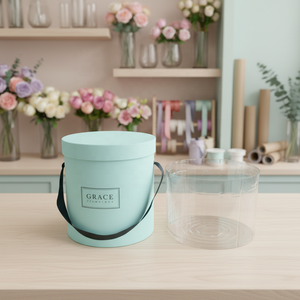
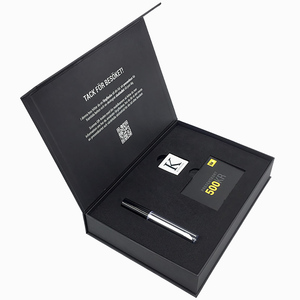
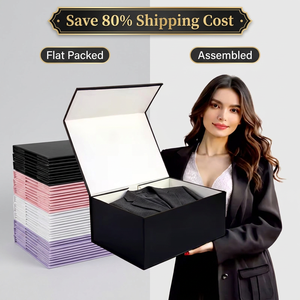
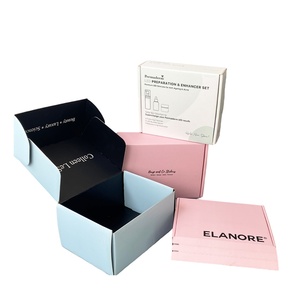
The global industrial and commercial packaging market is undergoing a fundamental structural transition. Modern procurement leaders, product design engineers, and supply chain directors no longer view plastic containers merely as protective vessels. Instead, custom OEM (Original Equipment Manufacturer) plastic containers represent high-performance assets that dictate logistics efficiency, brand perception, regulatory compliance, and environmental footprint.
Driven by rapid technological advancements in polymer chemistry, high-speed automated injection molding, and computer-aided mold flow simulations, custom plastic container manufacturing has reached unprecedented levels of precision. As global supply chains face volatile freight dynamics and stringent international sustainability mandates, working directly with a vertically integrated OEM plastic container manufacturer is essential for maintaining a competitive operational edge.
Selecting the optimal thermoplastic resin is the foundational step in OEM packaging engineering. Material properties directly govern mechanical strength, optical clarity, chemical resistance, thermal stability, and barrier performance against moisture and gas transmission.
| Polymer Type | Key Mechanical Properties | Chemical & Thermal Resistance | Primary Industrial Applications | Recyclability Grade |
|---|---|---|---|---|
| Polypropylene (PP) | High fatigue resistance, excellent living hinge capability, lightweight. | Resistant to acids, alkalis, and organic solvents. Heat resistant up to 120°C. | Food containers, medical labware, industrial totes, hinge-lid cases. | RIC 5 - High |
| High-Density Polyethylene (HDPE) | Superior impact strength, stress-crack resistance, low-temperature toughness. | Excellent chemical barrier against aggressive compounds, moisture-proof. | Chemical drums, bulk liquid shipping containers, agrochemical bottles. | RIC 2 - High |
| Polyethylene Terephthalate (PET / PETG) | Glass-like optical transparency, high tensile strength, rigid gas barrier. | Good oil and alcohol resistance. Thermal limits: ~65°C (PET) / ~75°C (PETG). | Cosmetic packaging, pharmaceutical jars, premium retail containers. | RIC 1 - High |
| Polycarbonate (PC) & ABS | Ultra-high impact resistance, structural rigidity, dimensional stability. | Moderate chemical resistance. High heat resistance (up to 135°C). | Reusable heavy-duty industrial crates, military electronics enclosures. | RIC 7 - Specialty |
| PCR Resins (Post-Consumer Recycled) | Variable tensile strength based on blend ratio (25%-100% PCR content). | Engineered to match virgin resin benchmarks via continuous compounding. | Sustainable retail packaging, eco-conscious consumer goods packaging. | Circular Economy |
A successful custom OEM container project depends entirely on the accuracy of mold design and tooling engineering. Our manufacturing facility utilizes SPI Class 101 multi-cavity hardened steel molds (H13 and S7 steel grade) capable of maintaining continuous high-volume production runs exceeding 1,000,000 cycles with zero dimensional degradation.
Through advanced Finite Element Analysis (FEA) and Moldflow® simulation software, our tooling engineers analyze melt front behavior, gate location placement, cooling line efficiency, and wall thickness shrinkage prior to steel cutting. This eliminates common manufacturing defects such as sink marks, weld lines, air traps, and differential warping, guaranteeing a uniform wall tolerance of within ±0.02mm across complex geometry.
Why Fortune 500 brands and global distributors partner with our manufacturing plants for specialized plastic packaging engineering.
Operating 65 modern injection molding machines ranging from 50 to 1,200 tons clamping force, alongside automated extrusion blow molding systems.
ISO Class 7 and Class 8 (Class 10,000/100,000) cleanrooms for medical grade, pharmaceutical, and bio-sensitive container production.
Full regulatory documentation including FDA food-contact compliance, EU No 10/2011, USP Class VI, REACH, RoHS, and UN Dangerous Goods ratings.
Advanced robotic IML integration, silk-screen printing, hot stamping, soft-touch matte coating, and metallization finishes for enhanced brand equity.
In-house 3D SLA/SLS resin printing, rapid aluminium bridge tooling (5,000 to 50,000 cycles), and digital CAD dieline generation within 24 hours.
Full product kitting, ultrasonic welding, gasket inserting, custom drop testing (ISTA 3A), palletization, and DDP export shipping management.
As corporate sustainability goals align with global legislative initiatives—such as the European Union’s Packaging and Packaging Waste Regulation (PPWR) and US State-level Extended Producer Responsibility (EPR) laws—the plastic container procurement ecosystem is undergoing a dramatic paradigm shift. B2B buyers must adapt to four critical mega-trends governing the next decade of OEM container sourcing.
The reliance on 100% virgin fossil-based resins is rapidly declining. Sourcing directors are mandating the integration of 25% to 100% Post-Consumer Recycled (PCR) polymer blends into OEM container designs. However, substituting virgin polymer with PCR introduces technical challenges regarding melt flow variability, color consistency, and stress-crack resistance. Modern OEM manufacturers solve this through advanced resin purification, melt filtration, and multi-layer co-extrusion technology—sandwiching PCR material between outer layers of food-grade virgin resin.
Industrial OEM plastic containers are transitioning into data-rich physical nodes within smart supply chains. Incorporating direct-molded RFID tags, high-density 2D DataMatrix codes, and NFC chips during the injection molding cycle enables real-time inventory tracking, tamper verification, and automated asset recovery. This trend is particularly dominant in pharmaceutical distribution, high-value chemical transit, and reusable returnable transport packaging (RTP).
Multi-material containers—such as plastic bottles with metal spring pumps or multi-layer non-separable films—are being phased out due to sorting facility contamination. The market demands monomaterial construction, where closure mechanisms, container bodies, and internal valves are manufactured from identical polymer families (e.g., all-PP pump systems). Monomaterial OEM containers can be placed directly into standard municipal recycling streams without disassembly.
To reduce freight carbon intensity and material consumption without compromising structural top-load strength, OEM manufacturers are implementing MuCell® microcellular foam injection technology. By injecting supercritical inert gases (N2 or CO2) into the melt stream, microscopic voids are created within the container wall core, reducing part weight by 10% to 20% while increasing structural flexural modulus.
Clear, direct technical answers to common questions encountered by procurement managers, packaging engineers, and global buyers during OEM plastic container project evaluation.
Partner directly with our senior packaging engineers and polymer specialists. Receive comprehensive technical drawings, unit quotation breakdowns, and material recommendation reports within 24 hours.
Send an Inquiry