Precision-manufactured corrugated mailers, magnetic rigid gift boxes, and eco-friendly paper packaging crafted for international export compliance.


In the contemporary global trade matrix, paper-based packaging has evolved far beyond a passive vessel for shipping goods. It represents an essential touchpoint for brand identity, consumer trust, structural safety, environmental compliance, and supply chain efficiency. As global regulatory bodies enact stringent frameworks—such as the European Union’s Packaging and Packaging Waste Regulation (PPWR) and the US FDA 21 CFR food contact standards—multinational food brands, confectionery distributors, e-commerce enterprises, and luxury retail conglomerates are re-evaluating their B2B packaging procurement models.
China has solidified its position as the premier global hub for advanced paper packaging manufacturing. By combining vertically integrated paper mills, high-precision German-engineered printing presses (such as Heidelberg and Roland offset systems), automated box-folding robotics, and sustainable raw material sourcing (FSC-certified virgin kraft and high-density recycled greyboard), top Chinese manufacturers offer unmatched cost-efficiencies alongside high-spec quality control.
Selecting the optimal substrate demands a microscopic understanding of paperboard caliper, density, Cobb moisture absorption values, and compression resistance. Below is an engineering overview of primary materials utilized across our manufacturing lines:
Explore customized structural configurations designed specifically to address product protection, brand unboxing experiences, and regulatory compliance.
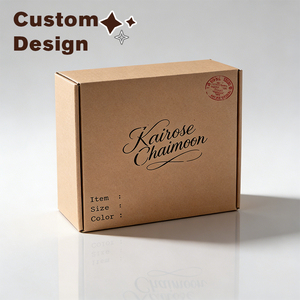
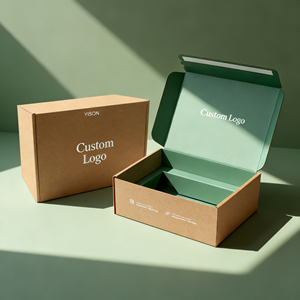
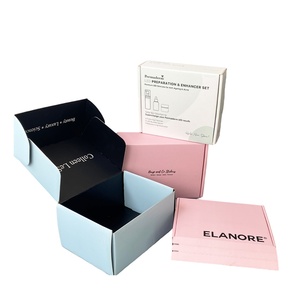
Roll-end tuck-front (RETF) and self-locking corrugated mailers. Engineered with double-wall side panels to withstand rough courier transit without requiring exterior tape, delivering a sleek unboxing presentation.
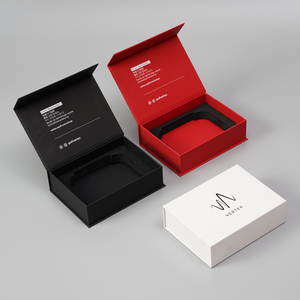
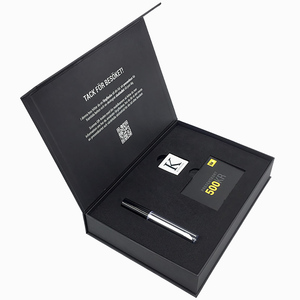
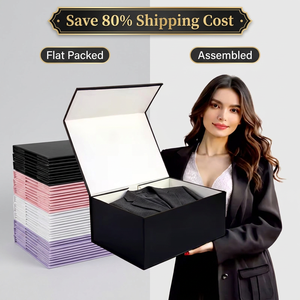
Collapsible luxury boxes built with concealed neodymium magnet closures. Constructed from 1.5mm–2.0mm solid greyboard, these boxes ship flat to cut ocean freight costs by up to 70% while offering instant snap assembly.
FDA-compliant, grease-resistant folding cartons, pastry containers, and cake boxes featuring clear food-safe PET window inserts, aqueous anti-oil coatings, and tear-strip security seals.
The following engineering matrix outlines material grades, production lead times, minimum order quantities (MOQs), and recommended applications for global buyers:
| Packaging Style | Material Specification | Standard MOQ | Production Lead Time | Primary Industrial Application |
|---|---|---|---|---|
| Custom Corrugated Mailer | E-Flute (1.5mm) / B-Flute (3.0mm) + 175gsm Kraft | 50 Units | 7–9 Business Days | E-commerce apparel, cosmetics, direct-to-consumer kits |
| Rigid Magnetic Box | 1.5mm–2.0mm Heavy Greyboard + 157gsm Art Paper | 100 Units | 10–14 Business Days | Luxury watches, electronics, PR gift sets, wine bottles |
| Food-Grade Bakery Carton | 300gsm–400gsm Virgin SBS with Bio-Barrier Film | 100 Units | 7–10 Business Days | Donuts, pastries, confectionery, gourmet coffee packaging |
| Heavy-Duty Freight Shipper | Single Wall (C-Flute) or Double Wall (BC-Flute) | 100 Units | 8–12 Business Days | Master carton shipping, palletized cargo, bulk food exports |
| Countertop Display Tray (PDQ) | High-Density Corrugated Litho-Laminated | 100 Units | 9–12 Business Days | Supermarket checkout impulse items, retail shelf displays |
*Note: Production lead times begin immediately after digital proof and dieline sign-off. Express rush order processing (4–7 business days) is available upon request for qualifying print-ready vector artwork.
As the global market transitions toward circular economy paradigms, procurement directors and supply chain managers must anticipate upcoming disruptions in packaging technology, raw material legislation, and international trade dynamics. Drawing from empirical production data and global market intelligence, we identify three critical megatrends defining the next decade of B2B food and custom packaging procurement:
For decades, per- and polyfluoroalkyl substances (PFAS) were widely used to provide oil and water resistance in paper food packaging. However, expanding legislative bans across North America and Europe have rendered PFAS coatings obsolete. Modern Chinese food packaging suppliers are pioneering non-fluorinated, water-based dispersions (aqueous coatings) and bio-based PLA (polylactic acid) laminations derived from renewable cornstarch. These next-generation barriers provide equal grease resistance while allowing paperboards to remain 100% kerbside recyclable and industrial compostable.
To eliminate expensive multi-material separation processes at recycling facilities, global brands are mandating mono-material packaging designs. Instead of pairing paperboard with non-recyclable foil laminates or heavy plastic windows, modern dielines utilize cellulose-based clear films, hot-foil stamping substitutes, and mono-material corrugated cushions. This shift simplifies consumer waste disposal, compliance with Extended Producer Responsibility (EPR) fees, and international customs auditing.
As labor costs rise globally, major food manufacturers are automating their primary and secondary packaging assembly lines. This requires folded paperboard blanks, tuck-end cartons, and slotted containers to maintain strict dimensional tolerances within ±0.5mm. Sub-standard box scoring or uneven board caliper can lead to line jams, costly downtime, and product spoilage. Advanced Chinese factories utilize automated laser die-cutting machinery and optical vision inspection systems to ensure zero-defect precision on high-volume runs.
International food packaging export demands flawless adherence to safety, environmental, and chemical safety standards. Navigating these regulatory waters requires robust supplier verification processes and clear certification trails.
Direct food-contact paperboards must be certified under FDA 21 CFR 176.170 (aqueous/fatty food contact) and EU Regulation 1935/2004. This guarantees freedom from heavy metals, mineral oil hydrocarbons (MOSH/MOAH), and volatile organic compounds (VOCs).
Forest Stewardship Council (FSC-C123456) certification guarantees that virgin paper pulp originates from responsibly managed forests that preserve biodiversity, protect indigenous rights, and promote sustainable reforestation practices.
Top-tier production facilities maintain BRCGS (British Retail Consortium Global Standards) for Packaging Materials and ISO 9001 Quality Management System certifications, ensuring batch-to-batch consistency and full material traceability.
Partnering with an established Chinese packaging manufacturer gives global enterprises a strong competitive edge. By combining low minimum order quantities (MOQ starting at 50 units) with mass-scale production capabilities (exceeding 5,000,000 units per month), we serve emerging startups and global industry leaders alike.
In-depth technical answers addressing custom box specs, food safety compliance, shipping logistics, and artwork setup.
