Explore our engineered cardboard tubes, custom cylindrical packaging, and high-crush resistance shipping mailers manufactured under ISO 9001:2015 and FSC certification standards.
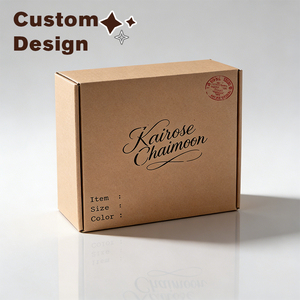
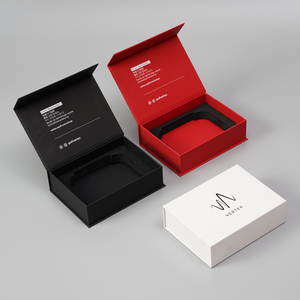
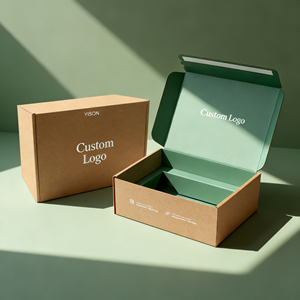

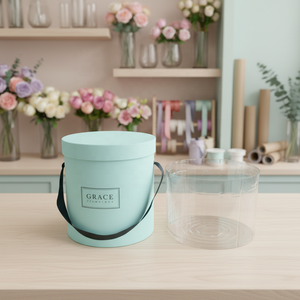
As a tier-one OEM/ODM manufacturer in China, we combine automated high-speed spiral winding technology with strict international quality assurance protocols to deliver superior cylindrical paper packaging.
Multi-ply high-speed spiral winding machines ensure uniform wall thickness, exceptional radial crush strength, and flawless dimensional stability across long production runs.
We strictly source FSC-certified virgin kraftliner and recycled paper stocks, employing food-grade, soy-based adhesives and water-dispersible barrier coatings.
Specialized internal coatings including grease-proof wax, foil barriers, and biodegradable plant-based membranes engineered for cosmetics, tea, and solid foods.
Heidelberg offset presses deliver high-definition CMYK, Pantone spot colors, hot foil stamping, debossing, spot UV, and luxury soft-touch tactile laminations.
Burr-free edge quality guaranteed by high-speed CNC rotary knife cutters, permitting strict lip-to-cap clearance for luxury telescopic and push-up tubes.
Comprehensive DDP, FOB, and CIF delivery services with sea, air, and express routing, supported by automated moisture-barrier master carton packaging.
Cardboard tubes—also categorized as paper tubes, paper cores, or cylindrical paper packaging—represent one of the most structurally efficient packaging geometry profiles available in modern B2B manufacturing. By utilizing continuous spiral winding or convolute wrapping of multi-ply paperboard, cylindrical structures achieve an optimal strength-to-weight ratio, offering superior resistance against circumferential pressure, axial bending, and vertical stack crushing.
Key Insight: Replacing traditional plastic bottles and rigid rectangular boxes with precision-wound paperboard tubes reduces overall packaging plastic usage by up to 98% while enhancing shelf appeal and brand differentiation.
Understanding the core mechanical differences between manufacturing methods is critical when procuring cardboard tubes from China suppliers:
Continuous bands of paperboard coated with high-performance aqueous adhesives are fed at an angle around a fixed cylindrical mandrel. Multiple plies overlap continuously, creating a seamless tube of indefinite length cut by inline rotary knives. Ideal for high-speed production, shipping mailers, and industrial cores.
A single wide sheet of paperboard is wrapped directly around a rotating mandrel parallel to its axis. Each layer wraps directly over the previous ply. Convolute tubes offer higher resistance to beam bending and axial deformation, frequently used for heavy textile rolls and specialty military packaging.
The performance of a cardboard tube depends primarily on the grammage (GSM) and caliper (thickness) of the constituent paperboard plies:
| Tube Category | Inner Diameter (ID) | Wall Thickness | Primary Substrate | Typical Applications |
|---|---|---|---|---|
| Cosmetic Push-Up Tubes | 15mm - 60mm | 1.2mm - 2.5mm | FSC Kraft + Bio-Wax Lining | Deodorant, Lip Balm, Solid Perfume |
| Luxury Telescopic Tubes | 50mm - 150mm | 1.5mm - 3.0mm | 157gsm Art Paper + Rigid Core | Spirits, Cosmetics, Perfume, PR Kits |
| Poster & Postal Mailers | 38mm - 100mm | 2.0mm - 5.0mm | High-ECT Kraftliner | Blueprints, Artwork, E-Commerce |
| Industrial Winding Cores | 76mm (3") / 152mm (6") | 5.0mm - 18.0mm | Heavy Recyclable Chipboard | Film Winding, Textile, Aluminum Foil |
As global environmental regulations tighten—such as the European Union’s Packaging and Packaging Waste Regulation (PPWR) and extended producer responsibility (EPR) mandates—procurement directors are actively overhauling their packaging portfolios. Over the next decade, B2B paper tube sourcing will focus on three primary strategic vectors:
Historically, paper tubes holding oily or moist formulations relied on polyethylene (PE) or aluminum foil laminations, which complicated kerbside recycling. The future of procurement belongs to bio-derived aqueous coatings and plant-based wax linings (such as carnauba or soy wax). These next-generation barriers provide grease resistance (KIT score > 8) while remaining 100% repulpable in standard paper recycling mills.
As consumer packaged goods (CPG) brands automate their filling and capping processes, acceptable dimensional tolerances for cardboard tubes have narrowed from ±0.5mm to under ±0.05mm. Sourcing partners must utilize laser-guided cutting equipment and humidity-controlled curing rooms to prevent wall swelling or ovality shifts during transit.
Procurement departments are evaluating B2B suppliers on Scope 3 carbon emission metrics. Lightweighting paper tubes by optimizing paper ply orientation and using high-ring-crush (SCT) recycled paperboard allows companies to cut freight weight while maintaining protective integrity.
The design landscape for cardboard tube packaging is evolving rapidly driven by consumer preference for tactile unboxing experiences and sustainable aesthetics:
Eliminating plastic caps in favor of rolled-edge paper end-caps or flush-fit paper lids creates a mono-material unit that consumers can dispose of in a single recycling bin without disassembly.
Brands are leveraging soft-touch matte lamination, blind debossing, micro-embossing, and metallic foil stamping to transform minimalist cardboard cylinders into high-end retail display pieces.
Clear answers to common questions regarding minimum orders, technical specifications, custom dielines, and international freight from China.
