Why Are Corrugated Shipping Boxes Ideal for Shipping?
A parcel can travel through conveyors, trucks, and sorting hubs before reaching a doorstep. Along the way, it may be stacked, tilted, or briefly exposed to rain. Corrugated Shipping Boxes are designed for these ordinary stresses, using a fluted paper layer between flat liners to add cushioning and stiffness without excessive weight. That structure helps protect products while keeping packages practical to handle.
The material also has a strong recovery record. The American Forest & Paper Association reported a 93.6% U.S. corrugated cardboard recycling rate for 2022. This figure reflects reported recovery, not a guarantee that every box will be recycled; local collection rules and contamination still matter. A clean, dry box is more useful in the recycling stream than one soaked with oil or food.
There’s a trade-off. A box that is too large can waste material and allow contents to shift, while an undersized box may offer too little protection. Box strength, flute type, closure, and cushioning should match the product and shipping route. The International Safe Transit Association’s package-testing procedures provide a useful framework for evaluating distribution risks, but real shipments can still surprise you. No box is magic.
This guide examines why corrugated packaging is widely used, how its construction supports protection, and what buyers should consider when choosing a box. The best choice is not always the thickest one. It is the box sized and specified for the job.
What Corrugated Shipping Boxes Are Made Of
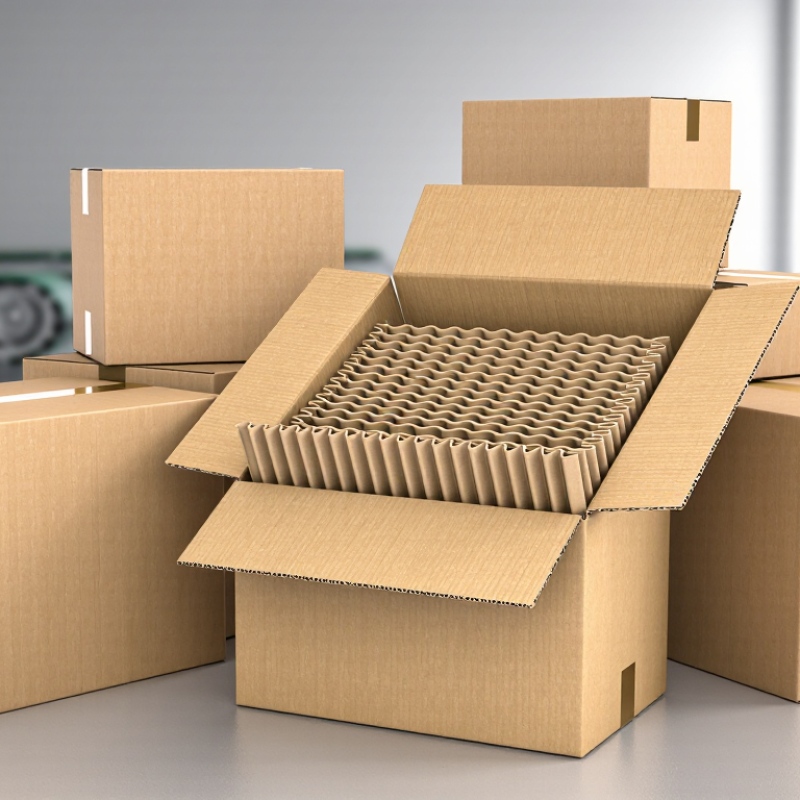
Corrugated shipping boxes are built from paperboard layers, not from one thick sheet. Flat outer liners cover a wavy inner layer called the fluting. The flutes create small arches between the liners, adding stiffness while leaving light air spaces. That structure helps a box resist everyday bumps and stacking pressure. It is simple, but effective.
The fluted medium is usually made from paper fibers, as are the liners. Depending on the box grade, those fibers may include recycled material, newly processed fiber, or a blend. A thin layer of adhesive bonds the flutes to the liners. Box makers combine layers in different ways: single-wall board has one fluted layer, while double-wall board has two. More layers can improve strength, but they also add weight and material. Bigger is not always better.
Look closely at a cut edge. You can see the alternating peaks and valleys. Those channels can cushion modest impacts, though they do not make a box waterproof or crush-proof. Moisture can soften paper fibers, and a poorly sized box may still collapse under uneven loads. The exact performance depends on board construction, flute size, and how the box is packed. That part is easy to overlook. A sturdy box still needs a sensible fit and careful sealing.
How Their Layered Structure Provides Strength
Why Are Corrugated Shipping Boxes Ideal for Shipping?
How Their Layered Structure Provides Strength
Corrugated boxes gain strength from a simple layered design: two flat linerboards sandwich a fluted, wave-shaped medium. Those arches help resist crushing and spread pressure across the box, rather than concentrating it on one weak spot. The air pockets also provide a small buffer when parcels bump during handling. It is a practical structure, not magic. A damp corner or a badly placed heavy item can still weaken the box.
The Fibre Box Association describes box performance through measures such as edge crush and box compression strength; these help match packaging to stacking and shipping demands. In practice, stronger board is not always the answer. A snug fit, evenly distributed contents, and tape across the main seam matter too. The U.S. EPA’s 2018 Advancing Sustainable Materials Management report estimated that 32.1 million tons of corrugated boxes were recycled from 33.3 million tons generated—about 96 percent. That figure speaks to the material’s recovery, though it does not guarantee every box is recyclable after use.
Tips: Keep boxes dry, place the heaviest items at the bottom, and avoid empty gaps that let goods shift. Test your packing setup with a filled box; real handling can reveal weaknesses a specification misses.
How Corrugated Boxes Protect Goods in Transit
Why Are Corrugated Shipping Boxes Ideal for Shipping?
How Corrugated Boxes Protect Goods in Transit
Corrugated boxes protect shipments through a simple layered structure: flat linerboards surround a fluted inner sheet. Those curved flutes act like small shock absorbers, helping cushion impacts and resist crushing. A snug box also limits movement, so a ceramic mug is less likely to strike the carton wall during a drop. Still, the box is not magic. Weak corners, excess space, or wet conditions can reduce its protection.
For parcel shipments, ISTA Procedure 3A evaluates packages under simulated transport hazards, including drops, vibration, and compression. This is why box strength should match the product’s weight and route, rather than relying on appearance alone. The U.S. EPA’s 2018 Facts and Figures report estimated a 96.5% recycling rate for corrugated boxes. That is useful after delivery, but it does not mean every box can safely be reused; inspect it for crushed edges, tears, and soft spots.
Tips: Choose a box that leaves room for cushioning, not rattling. Keep heavy items low and centered. Seal all seams with suitable packing tape. Test a packed sample with a gentle shake; if the contents shift, add support or choose a better-fitting box. A little extra care matters.
Why Corrugated Shipping Boxes Protect Goods in Transit
Corrugated board combines flat liners with fluted medium. Common single-, double-, and triple-wall constructions contain three, five, and seven total layers, respectively. Additional layers can provide more cushioning and stacking strength, though actual performance depends on board grade, box design, and the goods being shipped.
Why Their Light Weight and Versatility Benefit Shipping
Corrugated shipping boxes keep packaging weight low without leaving products exposed. Their fluted inner layer sits between flat liners, adding rigidity and cushioning with relatively little material. A worker can fold cartons flat, store them on a shelf, then assemble them around books, glassware, or spare parts. That saves storage space before dispatch. It also makes box sizes and internal dividers easy to adapt.
Lower package weight can reduce the mass moved across a delivery network, especially when many parcels travel together. But lighter is not automatically cheaper. Carriers may price shipments by dimensional weight, so an oversized carton can still cost more than a snug one. Match the box to the item, and add paper cushioning or a fitted partition where movement could cause damage. A box that is too tight can fail at its seams; one that is too roomy needs more filler. The right balance takes testing.
Corrugated packaging also fits established recovery systems. The U.S. Environmental Protection Agency’s 2018 Advancing Sustainable Materials Management report estimated that 96.5% of corrugated boxes were recycled. That figure is historical, not a promise for every location. Local collection rules and clean, dry material matter. Versatility helps here, too: after unpacking, many boxes can be flattened for collection instead of occupying a whole bin. Still, reuse is not endless. Wet board loses strength, and worn corners deserve a closer look.
How Recyclability Makes Corrugated Boxes a Practical Choice
Corrugated shipping boxes are practical partly because their paper fibers can re-enter the packaging stream after delivery. The American Forest & Paper Association reported a 93.6% U.S. corrugated cardboard recovery rate for 2022. That high recovery rate reflects established collection and sorting systems, not a guarantee that every box gets recycled. A clean, dry carton is more likely to be accepted than one soaked by rain or stained with food.
For a small warehouse, the routine is simple: remove loose packing material, flatten the box, and keep it away from wet waste. Tape and labels may be acceptable in many local programs, but recycling rules vary, so check municipal guidance. Less hassle. Recovered fibers can be made into new paper packaging, although repeated processing shortens fibers and limits how many times they remain useful. This is one reason recycled and new fibers are often blended. Corrugated is not impact-free: making it uses energy and water, and long transport routes still add emissions. Recyclability helps most when boxes are reused or collected cleanly, rather than treated as disposable after one trip. That distinction is easy to overlook.
Conclusion
Corrugated Shipping Boxes are made from layers of paperboard, including a fluted inner layer sandwiched between flat outer sheets. This layered design creates a strong, supportive structure that helps boxes withstand stacking, handling, and everyday movement during transit. The cushioning effect of the fluting can also help reduce the impact of bumps and vibrations, keeping goods better protected as they travel.
Despite their strength, corrugated boxes are relatively lightweight, which makes them easy to handle and helps avoid adding unnecessary weight to shipments. They can be produced in a range of sizes and shapes to suit different items, offering practical versatility for packing and shipping. Because they are made from paper-based materials and are commonly recyclable, corrugated boxes can also be a convenient packaging choice that supports material reuse while meeting many everyday shipping needs.