Choosing reliable Custom Kraft Boxes suppliers requires more than comparing catalog prices. Global buyers must examine material quality, production consistency, printing accuracy, and export experience. A strong supplier should explain its kraft paper grade, recycled content, GSM, coating options, and box compression performance. It should also provide clear samples before large production begins.
Packaging sustainability expert Bob Lilienfeld has said, “The most sustainable package is the one that protects the product.” That principle matters here. A beautifully printed box is still a poor choice if it collapses during ocean transport. Practical details count. Think of stacked cartons in a humid warehouse, tight pallet space, and labels scanned at a busy distribution center.
This guide reviews ten Custom Kraft Boxes suppliers for international buyers. The comparison considers factory capabilities, customization flexibility, minimum order quantities, quality controls, communication, certifications, and shipping support. Suppliers serving food, cosmetics, retail, and subscription brands may need different specifications. Not every low-cost quotation represents real value.
Some buyers may focus too heavily on appearance. That is understandable, but incomplete. Paper origin, ink safety, structural testing, and responsible sourcing deserve equal attention. Certification claims should be verified, not simply accepted from a sales page. Lead times can also change unexpectedly. The list offers a useful starting point, not a permanent ranking. Buyers should still request current samples, production evidence, and written terms before making a final decision.
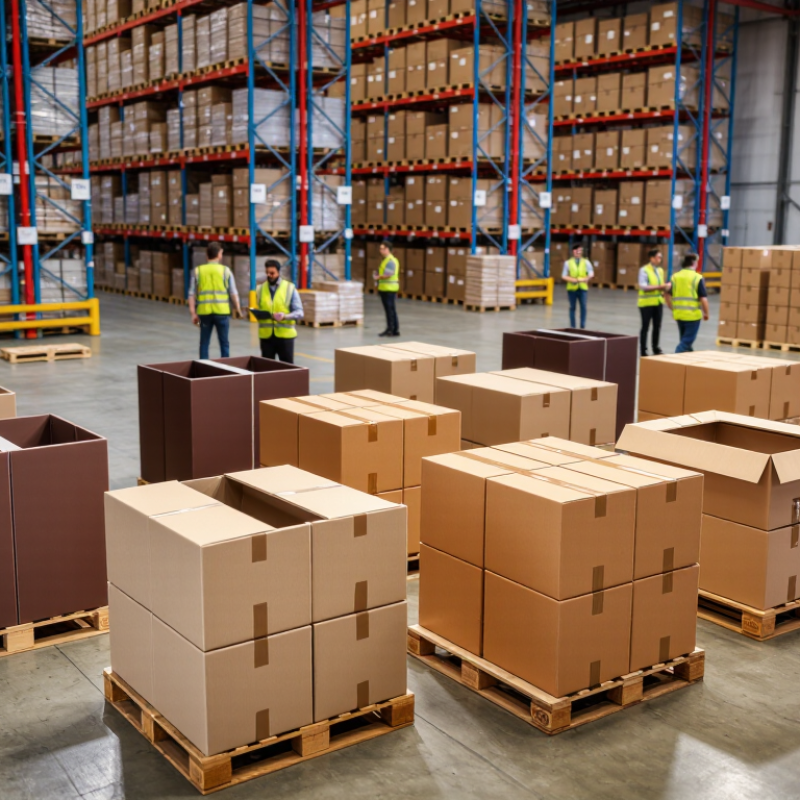
Custom kraft boxes are packaging containers made from sturdy brown paperboard. They can be tailored to specific products, dimensions, closures, and printing requirements. Suppliers may adjust the box depth for a glass jar, add dividers for multiple items, or create a locking tab for easier assembly. Recycled fibers often give kraft paper its natural color and visible texture. Small details matter.
Global buyers choose custom kraft boxes for practical and visual reasons. Their neutral surface suits handmade goods, cosmetics, food accessories, and retail products. A simple one-color print can display instructions, handling marks, or a carefully designed logo. Flat-pack structures also reduce storage space and shipping volume. This can lower logistics pressure for importers ordering in different markets. However, kraft paper is not automatically strong, recyclable, or suitable for every product. Moisture can weaken untreated board.
From my packaging checks, I would confirm board thickness, internal dimensions, folding accuracy, and print consistency before approving bulk production. A sample should hold the real product, not an empty substitute. Drop testing can reveal crushed corners or loose closures that photographs hide. Buyers should also request fiber-content details and verify whether coatings affect local recycling systems. Supplier claims need evidence. A box may look sustainable while using unnecessary layers, excessive ink, or mixed materials. That uncomfortable detail deserves attention.
Comparative market reference based on common international sourcing requirements for custom kraft packaging
| Rank | Anonymous Supplier Profile | Primary Sourcing Region | Common Box Formats | Typical Kraft Material | Customization Capability | Indicative MOQ | Typical Production Time | Best Fit for Global Buyers |
|---|---|---|---|---|---|---|---|---|
| 1 | Supplier Profile A | East Asia | Mailer boxes, folding cartons, shipping boxes | Recycled kraft paperboard and corrugated kraft board | High | 500–1,000 units | 15–30 working days | E-commerce brands requiring scalable export packaging |
| 2 | Supplier Profile B | Southeast Asia | Die-cut boxes, tuck-end boxes, retail cartons | Brown kraft paperboard, commonly 300–500 gsm | High | 1,000–2,000 units | 18–35 working days | Beauty, food, and household product packaging |
| 3 | Supplier Profile C | South Asia | Rigid-style kraft boxes, gift boxes, sleeve boxes | Kraft-wrapped paperboard with recycled inner board | Medium to High | 500–1,500 units | 20–40 working days | Premium presentation packaging with a natural appearance |
| 4 | Supplier Profile D | Eastern Europe | Mailer boxes, subscription boxes, postal cartons | Corrugated kraft board, usually single-wall construction | High | 1,000–3,000 units | 15–30 working days | European buyers seeking shorter regional transport distances |
| 5 | Supplier Profile E | Western Europe | Folding cartons, food boxes, display cartons | Recycled kraft board suitable for printed retail packaging | High | 1,000–5,000 units | 12–25 working days | Retailers prioritizing recycled content and regional fulfillment |
| 6 | Supplier Profile F | North America | Shipping cartons, product boxes, subscription packaging | Corrugated kraft board with recyclable paper-based components | High | 500–2,000 units | 15–35 working days | Direct-to-consumer businesses needing domestic replenishment |
| 7 | Supplier Profile G | Latin America | Produce boxes, takeaway boxes, retail cartons | Brown kraft paperboard and corrugated fiberboard | Medium to High | 1,000–5,000 units | 20–40 working days | Food and agricultural businesses seeking lightweight packaging |
| 8 | Supplier Profile H | Middle East | Luxury kraft boxes, folding cartons, gift packaging | Coated or uncoated kraft board with paper-based inserts | High | 500–2,000 units | 20–40 working days | Hospitality, gifting, and specialty retail packaging |
| 9 | Supplier Profile I | Oceania | Mailer boxes, moving cartons, protective shipping boxes | Recycled corrugated kraft board in single- or double-wall grades | Medium | 500–2,000 units | 15–35 working days | Online sellers requiring durable packaging for parcel delivery |
| 10 | Supplier Profile J | Africa | Retail cartons, agricultural boxes, shipping boxes | Kraft paperboard and corrugated fiberboard | Medium | 1,000–5,000 units | 20–45 working days | Regional manufacturers seeking practical, recyclable packaging |
What Custom Kraft Boxes Are
Custom kraft boxes are paper-based packaging products manufactured to a specified size, structure, printing design, material grade, and finishing requirement. They may use kraft paperboard for folding cartons or corrugated kraft board when additional cushioning and stacking strength are needed.
Why Global Buyers Use Them
Global buyers commonly select custom kraft boxes because they are lightweight, printable, adaptable to many product shapes, compatible with paper recycling systems in many markets, and suitable for both retail presentation and parcel shipping. Final performance depends on board grade, moisture exposure, box dimensions, printing method, and transport conditions.
Note: MOQ and production-time figures are indicative market ranges for comparable custom packaging projects. Actual terms depend on material availability, artwork approval, tooling, order volume, destination, and shipping method.
They are brown paperboard containers made for specific products. Suppliers can adjust size, depth, closures, dividers, and printing. Recycled fibers often create visible texture and uneven color. Small details matter.
Their neutral surface suits handmade goods, cosmetics, accessories, and retail items. Flat-pack designs save warehouse space and reduce shipping volume. Simple printing can show instructions, handling marks, or product information. They are practical.
No. Untreated kraft board can weaken when exposed to moisture. Mixed materials, coatings, heavy ink, and extra layers may complicate recycling. Ask for fiber-content details and local recycling guidance. Looks can mislead.
Use the real product, not an empty substitute. Measure length, width, and depth with a digital caliper. Check board thickness, folding accuracy, corners, glue lines, and closure strength. Photographs are insufficient.
Fill the boxes and stack them under pressure for 24 hours. Record panel bending, crushed corners, and loose closures. A basic drop test may reveal hidden weaknesses. It is not a laboratory test.
Lightweight 250–300gsm board may suit small retail items. Heavier 350gsm board usually feels stronger but can cost more. Corrugated kraft offers added protection for larger products and long-distance transport. Selection depends on product weight and handling conditions.
Flexographic printing suits simple one- or two-color designs. Digital printing supports detailed artwork, short runs, and frequent changes. White ink can improve contrast on brown kraft but increases cost. Request a physical proof. Screens can mislead.
Include boxes, printing plates, tooling, samples, packing, and freight. Typical minimum orders may range from 500 to 5,000 pieces. Small orders often cost more per unit. Large orders require more storage.
Request current documents for paper sources, recycled content, inks, adhesives, and safety testing. Sensitive-product packaging may require contact-material or migration reports. Check the laboratory, test date, factory name, and material description. Certificates should match the actual product.
Do not trust a polished catalog alone. Confirm exact dimensions, artwork, folding style, quantity, and delivery terms. Ask about batch traceability and failed inspections. I once approved a sample too quickly. That shortcut was a mistake.
Custom Kraft Boxes are a practical and sustainable packaging solution for global buyers seeking reliable protection, attractive presentation, and flexible branding. Made from recyclable kraft paper or board, they can be customized in size, structure, color, finish, and printing style to suit products across retail, food, cosmetics, and general consumer markets. Their natural appearance and adaptable design make them popular for businesses that want packaging that balances functionality, visual appeal, and environmental responsibility.
This guide introduces ten types of qualified suppliers for international purchasing and explains how to assess them through material quality, production consistency, printing accuracy, certifications, communication, and export experience. It also compares key factors such as paper grades, protective coatings, printing methods, pricing models, tooling costs, and minimum order quantities. By reviewing samples, confirming compliance documentation, checking production capacity, and matching order volumes with budget and lead-time requirements, buyers can select a supplier that delivers dependable Custom Kraft Boxes for their specific packaging needs.