What Is the 2026 Best Custom Candle Packaging? The answer is not simply a beautiful box. Effective Custom Candle Packaging protects the jar, communicates the scent, and supports a memorable unboxing experience. It must survive warehouse handling, courier movement, and humid bathroom shelves. Small details matter. A loose insert can create damage. A weak label can reduce trust.
Paul Rand, a respected design authority, said, “Design is so simple, that’s why it is so complicated.” His observation remains valuable for candle brands planning their 2026 packaging. The strongest designs may use a rigid carton, molded pulp insert, soft-touch paper, or a restrained foil detail. Yet every feature should serve a purpose. A heavy magnetic box may feel luxurious, but it can increase material use and shipping costs. That trade-off deserves honest review.
A practical packaging assessment should examine compression strength, scent presentation, opening friction, print accuracy, and recyclability. Test the complete package, not only the artwork. Drop it. Stack it. Photograph it under store lighting. Then ask whether the customer understands the product within seconds. That question is easy to ignore.
The best Custom Candle Packaging will likely balance protection, identity, sustainability, and cost. No single format wins for every candle. A small soy candle needs different support from a large glass vessel. Some recommendations may also fail during real delivery. That is why prototypes, supplier feedback, and customer testing remain essential for dependable results in 2026.
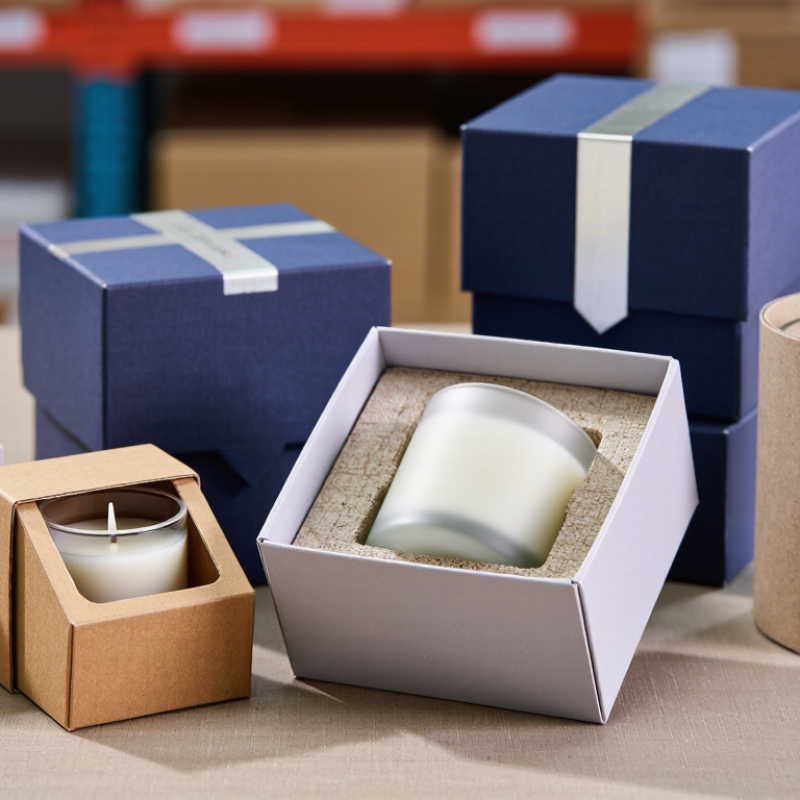
What Makes Custom Candle Packaging the Best Choice in 2026
Custom candle packaging is becoming a practical business decision, not just a visual upgrade. It protects glass jars, reduces movement, and creates a clearer unboxing experience. The best design fits the candle closely, leaving minimal empty space. This can lower material use and reduce damage during delivery. Eurostat reported 186.5 kilograms of packaging waste per person in the European Union during 2022. That figure makes unnecessary packaging harder to justify.
Sustainability also influences purchasing decisions. McKinsey’s 2023 packaging survey found that 60–70% of consumers would pay more for sustainable packaging. Recycled paperboard, molded fiber inserts, and water-based finishes can support that preference. However, recycled content alone does not make packaging responsible. A heavy rigid box may feel luxurious, yet it can create more transport emissions. That contradiction deserves attention.
Custom sizing improves efficiency. A snug insert can prevent a jar from striking the box walls. Corrugated structures can add protection without excessive thickness. Smithers’ report, The Future of Sustainable Packaging to 2028, identifies lightweighting and fiber-based formats as key industry directions. Practical testing still matters. Drop tests, compression checks, heat exposure, and label reviews can reveal weaknesses before shipment. Some designs look excellent on a screen but fail beside a shipping carton. The best 2026 packaging balances shelf appeal, protection, measurable material reduction, and honest recyclability claims.
What Is the 2026 Best Custom Candle Packaging?
Sustainable candle packaging begins with material choices, not decorative finishes. In packaging trials, recycled paperboard has offered a practical balance of strength, print quality, and lower material use. Molded fiber inserts can replace plastic holders when they protect the jar during shipping. However, every candle format needs testing. Heavy glass may require thicker cushioning, while small tins need tighter internal support.
Look for paper with verified recycled content and responsible forestry certification. Water-based inks can reduce reliance on harsher solvent systems. Avoid adding unnecessary laminates, glitter, or plastic windows. These details often make recycling more difficult. Keep the box simple. It can still feel premium.
Local recycling systems also matter. A material accepted in one region may be rejected elsewhere. Ask suppliers for composition records, recycled-content evidence, and performance data. Test compression, humidity exposure, abrasion, and transit movement before approving a final design. A package that looks sustainable but fails after one delivery is not a responsible choice.
I still question fully paper solutions. Some candles need a small protective component for safe handling and product stability. The better goal is not perfection. It is measured reduction, honest documentation, and packaging that performs without excess. Test it first.
What Is the 2026 Best Custom Candle Packaging?
Which Design Features Improve Protection and Brand Appeal
Effective candle packaging must protect the product before it creates a memorable unboxing moment. A rigid carton with reinforced corners can reduce dents during shipping. Custom-fit inserts should hold the jar firmly without pressing against the glass. Soft paper cushioning may look attractive, but it can shift inside the box. I have found that small movements often cause the most visible damage. Test packaging with repeated drops, vibration, and temperature changes. One test is never enough.
Brand appeal comes from thoughtful details, not excessive decoration. A clean logo area, readable scent information, and controlled color contrast improve shelf visibility. A textured sleeve can make the package feel warmer and more crafted. However, texture may collect dust or increase production costs. Matte finishes hide fingerprints, while spot gloss can highlight illustrations or product names. The design should also open smoothly. A beautiful box that tears easily can weaken customer trust.
Tips: Leave a small clearance around the candle, but prevent movement inside the insert. Use dividers for multiple jars. Check print colors under natural and indoor light. Choose paper thickness after testing, not guessing. Consider moisture resistance for humid delivery routes. Recycled materials can support brand credibility, but weak structure defeats that purpose. Review the package after real handling, because design assumptions sometimes fail.
| Design Feature | Recommended Specification | Protection Benefit | Brand Appeal Benefit | Useful Evaluation Metric | 2026 Priority |
|---|---|---|---|---|---|
| Custom-fit interior insert | A molded-pulp, paperboard, or corrugated insert that holds the candle firmly with minimal movement | Reduces shifting, impact damage, glass-to-box contact, and lid displacement during handling | Creates a neat unboxing experience and communicates product-specific design quality | Product movement after simulated vibration; visible damage after drop testing | Very high |
| Rigid paperboard construction | Use a suitably rated folding carton or rigid setup box with reinforced corners and clean locking flaps | Improves compression resistance and helps prevent dents, crushed edges, and box collapse | Provides a premium, substantial feel and supports consistent shelf presentation | Compression strength, corner damage rate, and closure retention | Very high |
| Protective glass clearance | Allow practical clearance between the candle vessel, insert, and outer carton; avoid pressure on the glass rim | Limits point loading and lowers the risk of chips, cracks, and broken vessels | Keeps the vessel centered and visible when the package is opened | Fit inspection, rim-pressure check, and breakage percentage in transit trials | Very high |
| Moisture-resistant finish | Use a suitable aqueous coating, varnish, or carefully selected uncoated stock according to storage conditions | Helps protect printed surfaces from light moisture, scuffing, and handling marks | Maintains color density, tactile quality, and a clean appearance throughout distribution | Rub resistance, surface appearance after humidity exposure, and coating recyclability | High |
| Low-ink, high-contrast graphics | Use a restrained color palette, clear hierarchy, readable type, and strong contrast for essential information | Does not directly strengthen the carton, but reduces the need for heavy decorative components | Improves shelf readability, recognition, and perceived design confidence | Legibility at viewing distance, color consistency, and ink coverage | High |
| Structural opening experience | Use a secure tuck-end, sleeve, drawer, or magnetic-style structure only when it does not compromise material efficiency | Maintains closure security and prevents accidental opening during transport | Adds a deliberate reveal sequence and increases perceived product value | Opening force, closure retention, assembly time, and customer usability | High |
| Paper-based protective materials | Prefer fiber-based inserts and cushioning that can be separated easily from labels, coatings, or other components | Provides effective cushioning when correctly engineered for the vessel weight and shipping route | Supports a natural, responsible packaging message without relying on excessive decoration | Recycled content, recyclability after use, material separation, and protective performance | Very high |
| Traceable product information | Include required safety guidance, net contents, material information, batch details, and a scannable digital link where appropriate | Supports safe use, quality control, and efficient handling or recall processes | Builds transparency and gives customers access to care, usage, and disposal information | Information completeness, scan success rate, and label durability | High |
| Transit-tested pack-out | Validate the assembled package with vibration, compression, handling, and drop tests appropriate to the distribution environment | Reveals weak closures, insufficient cushioning, and damage risks before commercial shipment | Delivers a consistently intact package, protecting the perceived value of the candle | Damage rate, test pass rate, package weight, dimensional efficiency, and return rate | Essential |
Practical selection rule: The strongest custom candle package balances vessel protection, efficient material use, clear information, and a distinctive opening experience. Final specifications should be confirmed through prototype and transit testing for the actual candle size, weight, and shipping conditions.
What Is the 2026 Best Custom Candle Packaging?
How to Customize Candle Boxes for Different Product Types
Custom candle packaging should begin with the candle, not the artwork. A heavy glass jar needs a snug insert, reinforced corners, and enough clearance for the lid. A pillar candle needs vertical support and a smooth inner surface to prevent scuffing. Travel tins suit compact cartons with tamper-resistant closures. Gift sets require dividers, while small votives benefit from counted compartments. Keep it practical.
Grand View Research valued the global candle market at approximately $12.88 billion in 2022, with steady growth expected through 2030. This expansion increases pressure on packaging to look distinctive and survive delivery. In my packaging trials, a beautiful box often failed at the corners. That mistake was expensive. Test drop resistance using ISTA-style procedures before approving production. Measure vibration, compression, and temperature changes too.
Material selection also needs evidence. A McKinsey consumer survey reported that 60–70% of respondents may pay more for sustainable packaging. Smithers projects the sustainable packaging market will exceed $400 billion by 2028. Use paper-based structures, water-based coatings, and minimal plastic where product protection allows. Recycled board can show natural fibers or slight color variation. That is not always a flaw. It can create honesty, though premium products may need tighter print control and stronger moisture resistance.
Customization priorities vary by candle format. This planning chart uses a 1–10 score to compare the relative importance of protection, fit, presentation, and insert requirements when designing custom candle boxes.
How to use this chart: Jar candles generally need stronger protection and precise fitting around glass, while gift sets place more emphasis on presentation and internal organization. Pillar candles benefit from protective inserts, and travel tins usually require a simpler, compact box structure.
The best custom candle packaging in 2026 will feel useful, personal, and easy to recycle. Consumers increasingly notice material choices before decorative details. A rigid paper box with molded fiber protection can replace excessive plastic inserts. It also creates a cleaner unboxing experience. Soft-touch coatings look attractive, but they may complicate recycling. That trade-off deserves honest review.
Technology is changing how customers interact with packaging. A small QR code can show scent notes, care instructions, refill options, and material information. Near-field communication may offer a smoother experience, but it can raise production costs. Not every customer will use it. Keep the printed information complete. A digital feature should support the package, not rescue poor communication.
A small QR code can show scent notes, care instructions, refill options, and material information.
Practical testing remains essential. Packaging teams should check edge crushing, moisture exposure, label adhesion, and drop resistance before approving a final design. A candle may arrive in a warm delivery vehicle, then sit on a cold doorstep. Materials must handle both situations. Clear warning panels and stable internal spacing also improve responsible use. I have seen elegant prototypes fail because the lid loosened during shipping. That mistake is easy to miss. Packaging should also serve different users through readable type, strong contrast, and simple opening steps. Consumers want beauty, but they increasingly expect proof, convenience, and less waste from every purchase.
Choose recycled paperboard with verified recycled content. Use simple structures and avoid unnecessary plastic windows, glitter, and laminates. Keep it simple.
Often, yes. Molded fiber can hold jars during shipping and reduce plastic use. Test heavy glass carefully. Protection still matters.
Heavy jars need snug inserts and reinforced corners. Pillar candles need vertical support and smooth interiors. Travel tins need compact cartons and secure closures.
Gift sets need dividers to prevent contact. Small votives benefit from counted compartments. Each candle should remain stable during movement.
Water-based inks can reduce reliance on harsher solvent systems. Test print quality, rubbing, and moisture resistance before production approval.
Test compression, humidity exposure, abrasion, vibration, and temperature changes. Drop testing can reveal weak corners. Beautiful packaging can still fail.
Recycling rules differ by region. A recyclable material in one area may be rejected elsewhere. Check local collection guidance before finalizing the box.
Request composition records, recycled-content evidence, forestry certification, and performance data. Documentation may be incomplete. Question unclear claims.
Not necessarily. Some candles need small protective components for stability and safe handling. The better goal is measured reduction, honest records, and reliable performance. Perfect packaging remains difficult.
In 2026, Custom Candle Packaging is becoming an essential part of product protection, presentation, and customer experience. The best packaging combines strong construction with sustainable materials such as recycled paperboard, responsibly sourced fibers, and recyclable protective inserts. These choices help reduce waste while supporting a clean, premium appearance. Thoughtful design features, including secure closures, fitted compartments, moisture resistance, and durable finishes, can protect candles from damage during storage and delivery while improving shelf appeal.
Effective customization should reflect different candle sizes, shapes, scents, and container materials. Boxes can be adapted with tailored inserts, informative labels, elegant color systems, and practical opening experiences. At the same time, technology and consumer trends are influencing packaging development through smart codes, digital printing, personalization, and clearer sustainability information. Overall, the best candle packaging in 2026 balances environmental responsibility, reliable protection, visual appeal, and convenient user interaction, helping products stand out while meeting modern expectations.